Nutrients
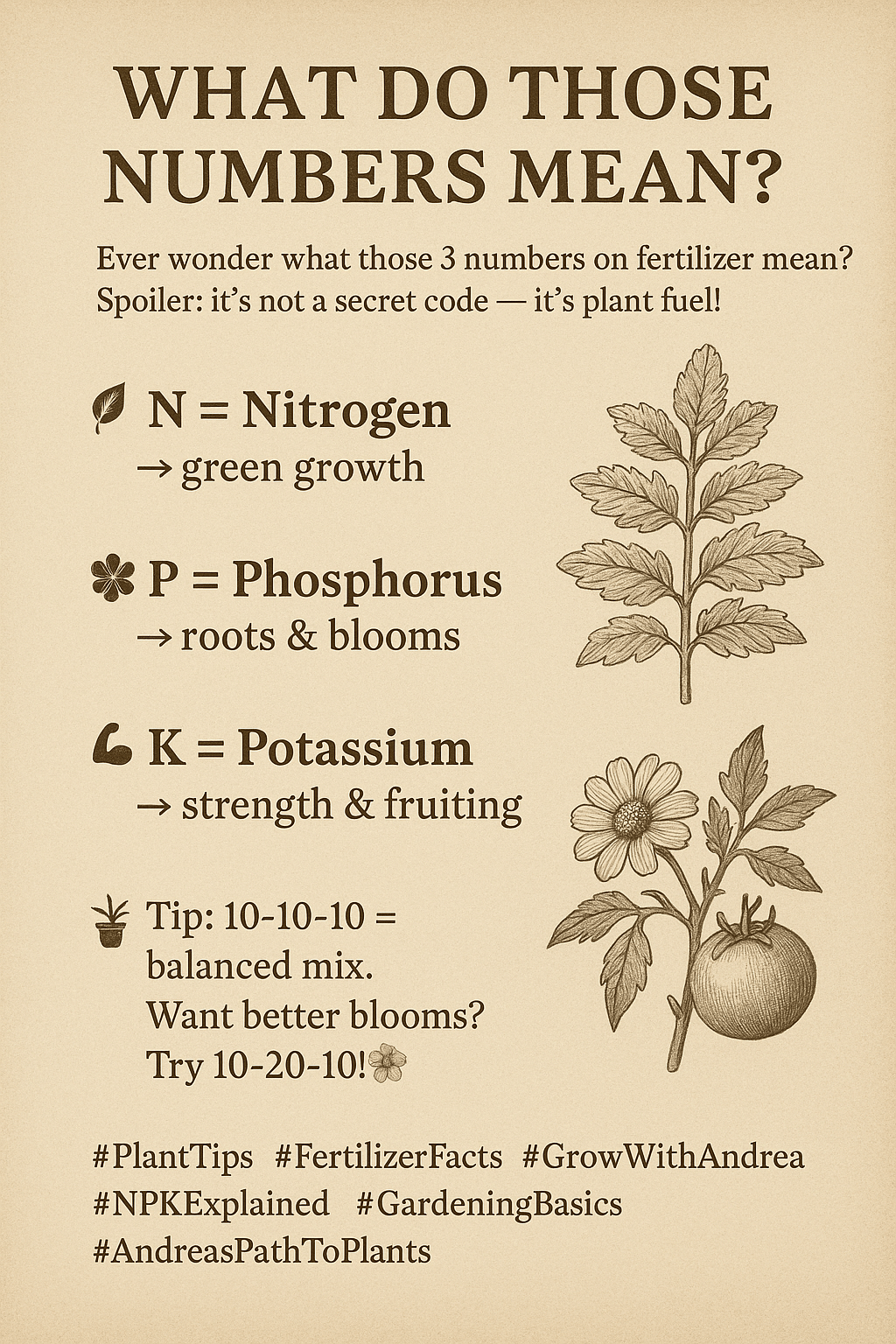
All plants require nutrients to grow. A pretty general statement, but it’s true. The top three nutrients are those three main numbers on your fertilizer package: nitrogen (N), phosphorus (P), and potassium (K). Or N-P-K. These are considered macronutrients, and are essential for most plant life and health.
The rest of the macronutrient family are: calcium (Ca), sulfur (S), magnesium (Mg), carbon (C), hydrogen (H), and oxygen (O). Then we get into micronutrients like boron, manganese, and copper and so on. It can get a little plant specific, but most general fertilizer formulations will also contain some of these elements.
The numbers on the label indicate the ratio or percentage of each element in the mix. For example, 10-10-10 means a pretty even mix of 10(N)-10(P)-10(K). If you see one that says 10-20-10, it’s heavier on that middle phosphorous(P) element. Now if you’re asking what’s in the rest of the mix because that doesn’t add up to 100 percent, the answer is other ingredients which help the plant take up or convert the elements into forms they can use. It’s a whole thing, but it’s not hugely important for you to specifically remember as we aren’t horticulturists.
Anyways, here’s how they help your plants:
Nitrogen: Essential for plant growth and helping chlorophyll production (makes those leaves green). I over-fertilized a plant once with too much nitrogen and the poor leaves went super dark green, wilty, and then it up and died. So yes, you can give too much of a good thing. Yellow leaves on the bottom the plant can indicate a lack of nitrogen, as plants will pull that nutrient from older leaves up to help in the production of newer ones up top.
Phosphorus: Helps with root growth and flowering. It also helps with photosynthesis. If a plant doesn’t get enough phosphorus, it may delay flowering and have sad brown leaves. And if the older leaves are turning purple in colour, this could also be an indication it needs a little boost.
Potassium: I think of this one as the ‘strengthener’ as it helps your plants stay healthy. It aids in water absorption and helps your plant withstand environmental changes like temperature drops or drought. It helps during the flowering stage which plants need to make fruit and seeds. An indication of a lack of potassium can be dark spots appearing on the leaves or browning along the edges of older leaves.
So when do you fertilize _____?
If we are talking about our houseplants: In the winter, most plants slow their growth due to the lessening of sunlight. It’s recommended to fertilize every couple months. In the summer when plant growth is stimulated by warmer temps and increased daylight, it’s recommended once a month. But remember, some plants, like your cactus, don’t need much at all. Ask your local greenhouse person if you’re unsure.
Now let’s shift our focus outside. When you’re first planting your annuals in that pot on your patio, definitely give it some fertilizer! You want that plant to establish itself quickly in it’s new home. I use a 10-20-10 mix (always read the package instructions) because I want to encourage root growth and help the existing flowers keep their glory. And if it’s a smaller pot, I will fertilize on the weekly. I once had some beautiful ‘Stargazer’ petunias – you know the dark purple ones that have white spots on them so they look like a starry night sky? I didn’t apply fertilizer, and the plants ended up losing their stars and reverting back to a plain old solid colour. I was so disappointed! But the lack of nutrients meant the plants couldn’t ‘perform to their full potential’. Lesson learned for the next year, especially when we invest so much in our gardens.
Tomatoes and other vegetable/fruit producing crops require specific and frequent fertilizing. Blossom end-rot in tomato fruit is a frequent complaint for first-time gardeners. It can be caused by a lack of calcium and also infrequent watering when plants can’t deliver the nutrients to where they are needed. Calcium improves cell growth (roots, bud growth, etc) and contributes to overall plant vigor. So tomato fertilizers specifically include calcium as part of their formula. BUT (big BUTT here) you need to apply this at the beginning of the season! You can’t “fix” what’s already broken in this instance. Let’s give our plants a healthy start! Stay on top of watering those tomatoes consistently all season, too, and that will help immensely.
There are slow release formulations for your over-stuffed hanging pots and larger flower containers especially since these ones require frequent watering. If I’m watering something almost every day, I’m probably not going to remember when I fertilized it last. Plus, it’s cheaper. It won’t be organic, probably, but the calibrachoa doesn’t care.
Which brings us to organic versus inorganic formulas. I think it’s really up to your own preference. Inorganic formulas are manufactured to be picked up easily by the plant (and can be quick release, or slow-release). Organic formulas are carbon-based and made from living things like seaweed, bonemeal, and so forth. I like to use organic products in my house and with most of the plants I am going to eat. However, on a cost basis, I don’t really object to using a inorganic fertilizer on the heavy feeders like those tomatoes. Heavy feeders require more frequent application and on a cost and nutrient-specific application, it makes sense to use the product best suited to the need.
When things start to wind down before harvest, I ease off on fertilizing. I want the plant to focus on finishing the existing fruit/veg and not on growing another branch. Speaking of – please stop pulling all the leaves off your tomatoes! They need those leaves for photosynthesis! Remember our elementary school science? Photosynthesis produces energy for all plant growth, including that fruit you want for salsa. By all means trim them, but don’t strip them bare.
For more information on fertilizing plants, I suggest checking out the University of Minnesota’s page here as they have a great little guide.
Happy gardening!
 Andrea’s Path to Plants
Leave a comment