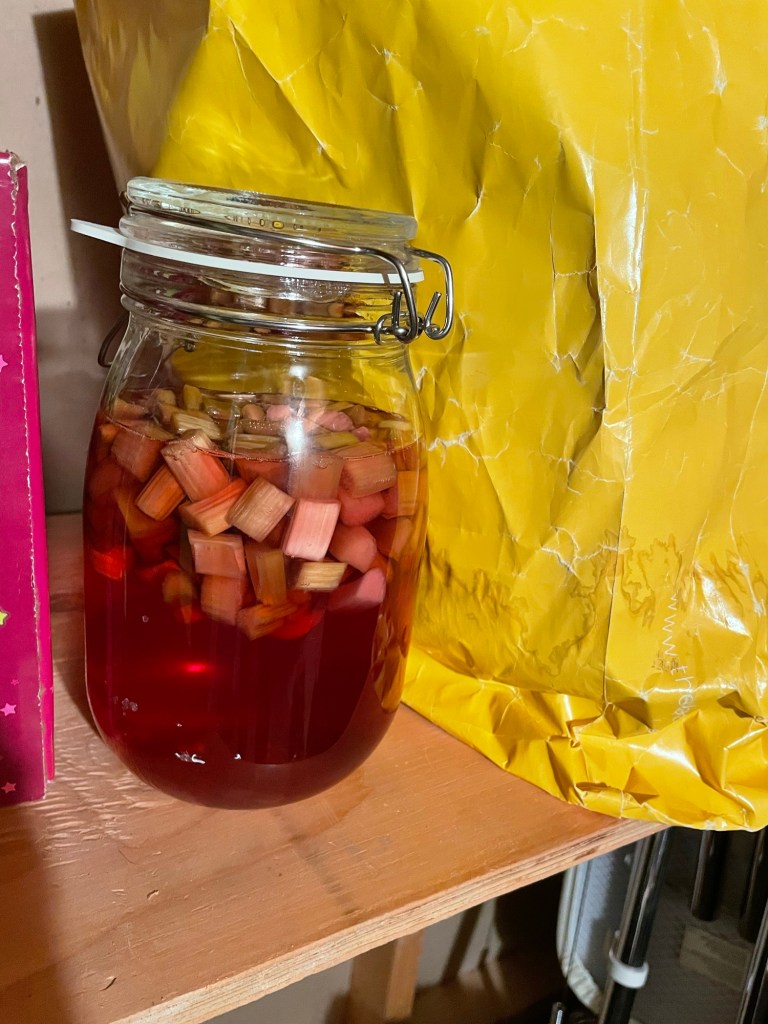
When we were kids, my mom used to bake the most amazing strawberry rhubarb pie in the summer. She sugared the crust and the tart but sweet treat didn’t stand a chance, especially when served with vanilla ice cream. We didn’t understand that rhubarb was a summer thing, we just knew it was delicious and would beg her to make it on a monthly basis. If we were lucky, she would freeze one extra pie for later in the year. And it would easily brighten any cool gray day. Now that I’m all grown up, I make a mean (yet very pretty) rhubarb gin.
Seasoned gardeners will tell you that once you have rhubarb in your garden, you will never get rid of it. In fact, it’s one of those very hardy perennials that will take over a very big space. I honestly love the huge green leaves, looking like a tropical ancient celebrating its Jurassic era.
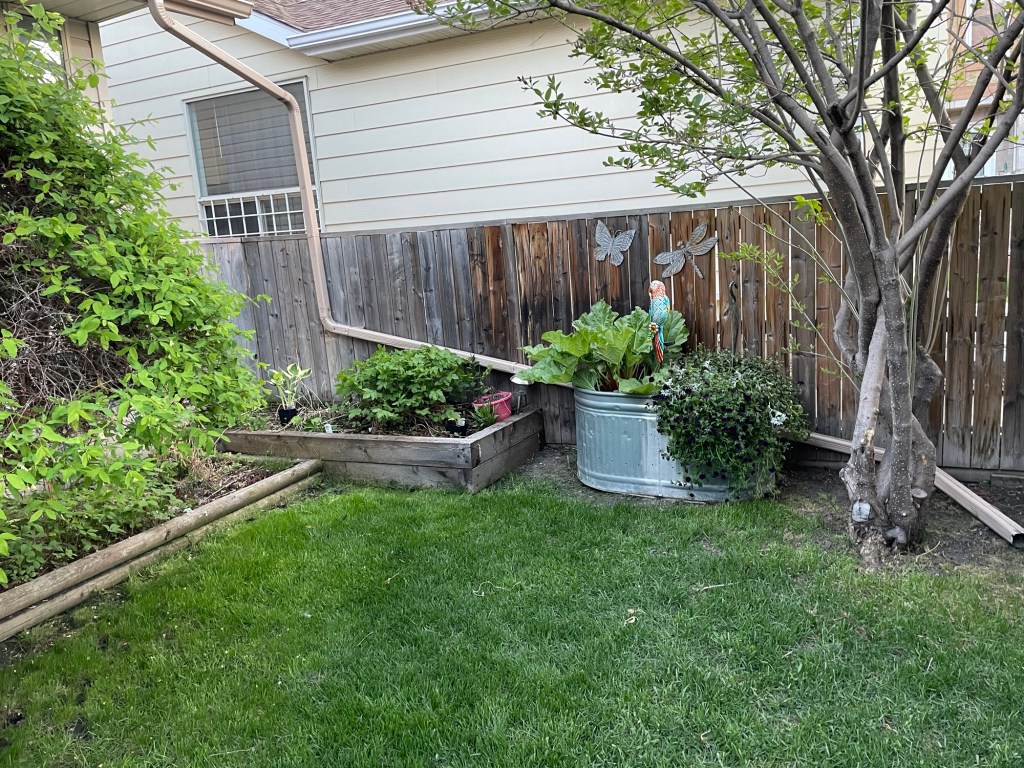
It has a very deep tap root and even an overzealous weed whacker/edge trimmer won’t take it out for long. So when I wanted to grow it in my backyard, I took a chance and planted it in a galvanized steel horse trough. Yep, you read that right. My husband humoured me, and we brought one home from his aunt’s ranch just east of Calgary. Plunked it along the west side fence, and gave it a go. It has drill holes in the bottom and sides for drainage, and gets shade in the later afternoons and evenings. I love it. It’s probably not to everyone’s taste, but it’s kinda quirky, and it replaced a huge old rotting steamer trunk that I’d had there previously. What’s your most favourite “salvaged” planter? Someone in my neighbourhood this year is using toilets in their front yard. But I digress.
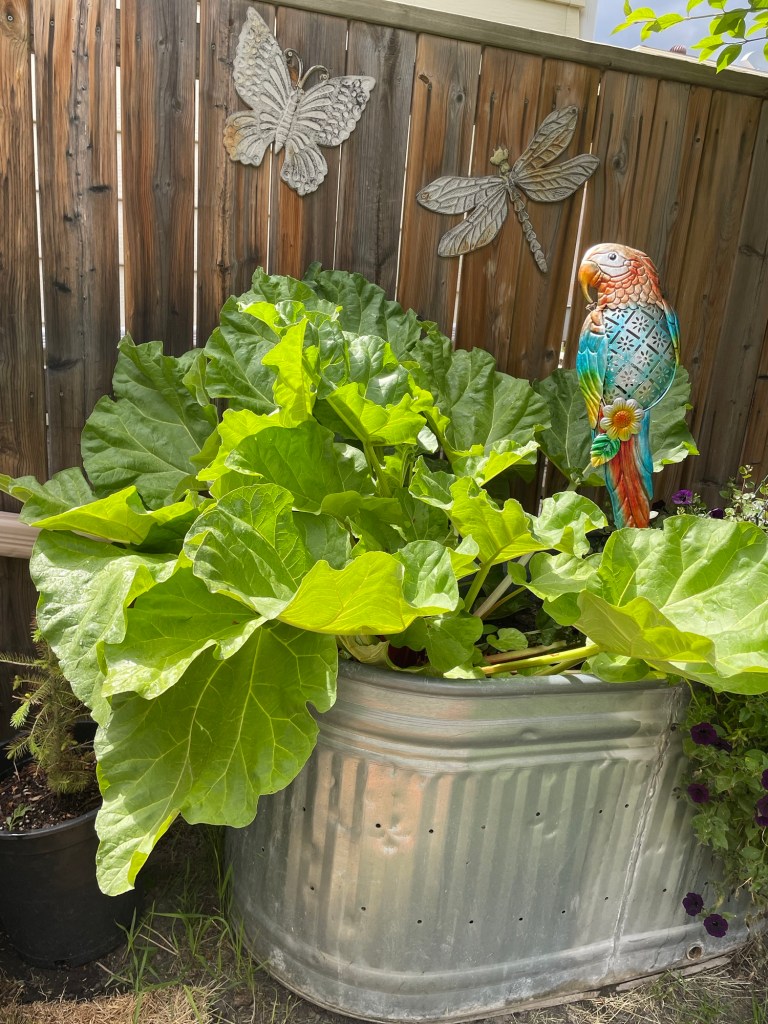
I could have probably gotten a division from a local gardener for free, but instead I grew it from seed. I started it indoors one early March. And has it ever grown over the years! Every spring I wonder if it will come back, as Calgary’s winter freeze/thaw Chinook cycles and minus forty degree temperature drops are notoriously hard on even our native plants. And especially in a raised metal bed. But he’s tenacious like his reputation, and keeps coming back every year. A little later in spring given his shady spot compared to sunnier locales, but always bigger and more glorious than ever.
He really doesn’t like a lot of attention, and I find with his spot he doesn’t need a lot of water until it’s the height of summer. There was one year I had ants farming black aphids on his more tender leaves but I gave them a little hosing and away they went. Sorry ants, but I do like my gin.
Rhubarb Tips
1. Do not harvest in the first year. Let it establish itself and do its root plant thing.
2. If your plant throws up some strange-looking flower stalk, (you may think it’s a weird mutilated alien head at first), simply pull it out if you’re planning to harvest a lot of it that year. If you just want it as an ornamental, let it do its plant thing. Plants be plants. It’s still going to come back next year. It’s just going to concentrate on the flowers and seeds versus huge leaves for you.
3. Choose the brightest, happiest stalks for harvesting. Green stalk is ok to eat, but just not as tasty, nor as pretty.
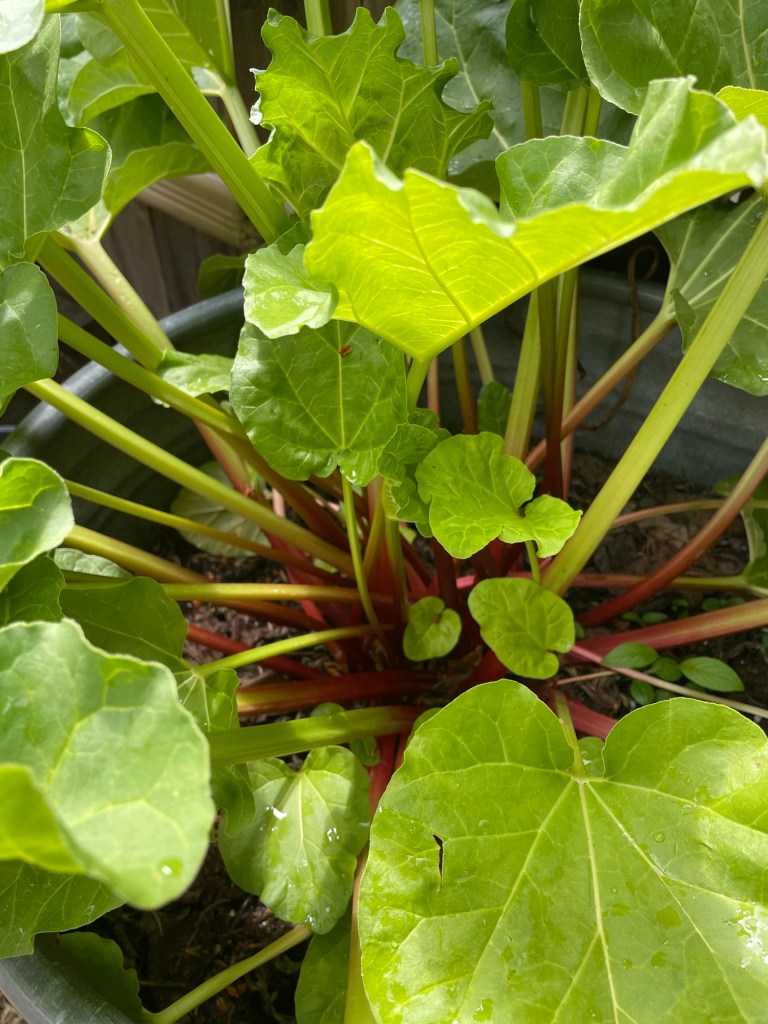
4. When harvesting, grasp and pull the stalk close to the base of the plant, don’t cut, don’t twist. It should separate pretty easily. The reason we do this? Because when you pull, it pulls the full stalk out from the base at the crown of the plant, where it will close and heal easily. Cutting leaves a portion of the stalk open and vulnerable to rot and disease. He is a tough but sensitive plant in some ways. (I know I mentioned weed whackery earlier but you do want to keep it healthy and growing consistently if you’re going to be eating it).
5. I’ve kept stalks in the fridge for up to a week, just be sure to trim the leaves off before storing. You can also freeze for later use if you’re unlike me and won’t forget about them until suddenly it’s November and you’re cleaning your freezer out and oh what the heck is this?
6. I usually harvest up until mid-summer. The stalks get woody and more bitter the older they get. After that I let it alone, so it can prep itself for fall and winter.
7. Winter preparation: once the leaves have died back in the fall I pull them away and throw them in the compost bin. The planter then gets a new layer of mulch and that’s that!
8. *Ruhbarb leaves are toxic to both humans and animals due to their high concentration of oxalic acid. Always cut the leaves off the harvested stalks. Stalks have a lower amount of oxalates (you can eat them raw, but oh so tart!) and cooking will further reduce the levels. If you have kidney stones or liver troubles, it’s recommended to avoid rhubarb.
9. Did you know: the high tannin in rhubarb can be good for digestion alongside the fiber it delivers? Just don’t have it every day for weeks on end. You can have too much of a good thing. 😛
Rhubarb Gin
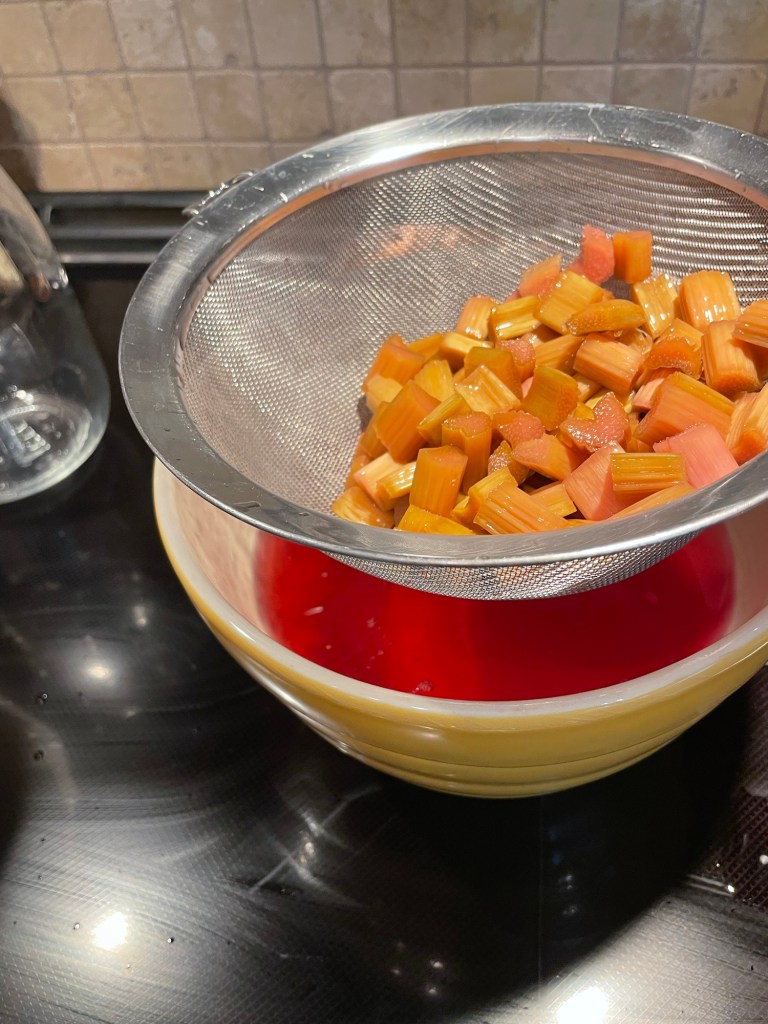
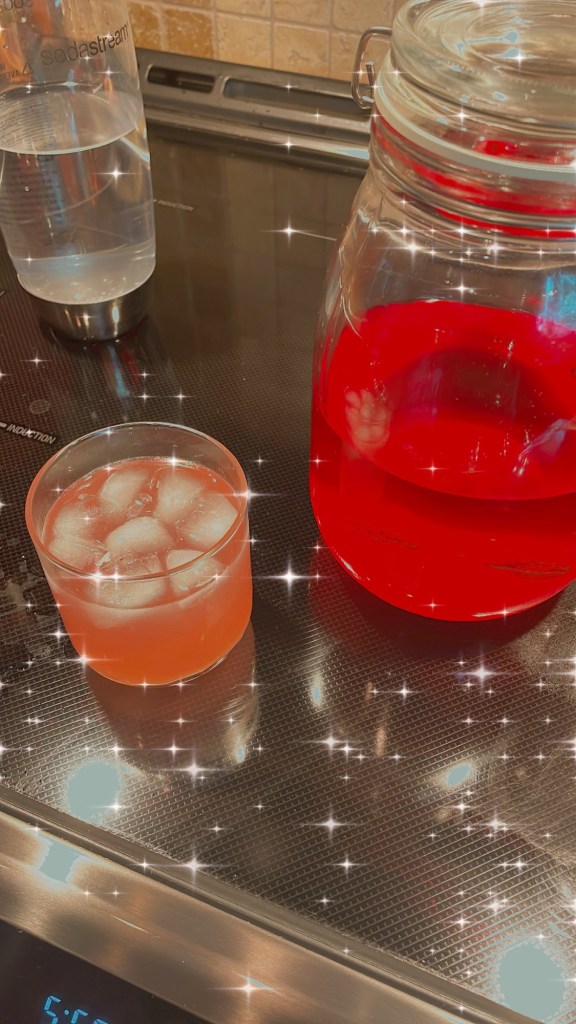
I follow this recipe, Rhubarb gin recipe | Good Food, and it’s never let me down. It’s a fun, easy little weekend project to get it going. Just remember to set a reminder in your phone for when to strain it. You can source berry sugar from your local grocery baking section. Because of the sugar content, I serve it with soda and a twist of lime. The beautiful pink colour will fade eventually, so don’t let it sit on your counter or in your cabinet for too long. Besides, it’s a summer thing!

If you have a recipe for strawberry rhubarb pie, please pass along. My mom lost hers.
 Andrea’s Path to Plants
Leave a comment