
As I write this, we are a week into water restrictions in my city. The restrictions are not due to drought, but rather to a large water main break. The impact on the immediate communities is profound. The surrounding areas suffered flooding and the subsequent shut off of their water. While limited services were quickly restored, they still lack potable water and the rest of Calgary has been asked to limit their showering, laundry, and even maximizing water use when washing dishes. Absolutely no watering of gardens with Calgary supplied water is allowed. A housefire last night in my neighbourhood emphasized the need to save water for essential services. Thankfully, no one was hurt in the fire and it was put out before it spread to adjacent houses.
A lot of Calgary gardeners were already prepared for drought-like conditions this summer – we received plenty of warnings this past winter. Last summer was very hot and dry, and the smell and haze of forest fires from the north and west of us caused frequent air quality warnings. So we’ve been planning and plotting. (Yes, that was an intended pun).
Here’s my favourite tips for those looking to make their gardening a little more water-wise:
- Rain barrels. They don’t have to be fancy! But:
- Choose a solid dark colour one if you can, as lack of sunlight discourages algae growth. Is algae bad? Well…it stinks. It can clog the valves, and it’s really not considered an organic fertilizer. I personally don’t want to water my carrots with it.
- Make sure the top has a tight mesh seal on it to prevent mosquitos from gaining access and making it their hatchery.
- Take it a step further!
- Attach some dripline off your rain barrel to run the length of your garden when it needs a little soak.
- My husband is a genius and has run a full misting system off our rain barrel into our greenhouse. I’ll post a separate blog on this. I love it.
- It is more time-consuming with the back and forth, but hey, think of it as adding more steps to that step-counter.
- *There’s advice out there to stop watering plants from the rain barrel a couple weeks before harvest. I’ve not researched this fully and so can’t comment on it.
- Mulch.
- There’s lots to choose out there, from organic to large wood chunks. Honestly, anything is better than nothing, but don’t just choose on aesthetics. Black may look pretty, but remember, it’s going to get hot in the sun. Likewise, that natural red cedar is going to fade over time. Do a bit of research of what will suit your type of garden best. (Check out Calgary Horticultural Society’s pages or, the University of Saskatchewan has some good tips).
- When you first apply it, make sure the garden bed is already watered (stick a finger in there and check the depth lol). Then spread the mulch and water again.
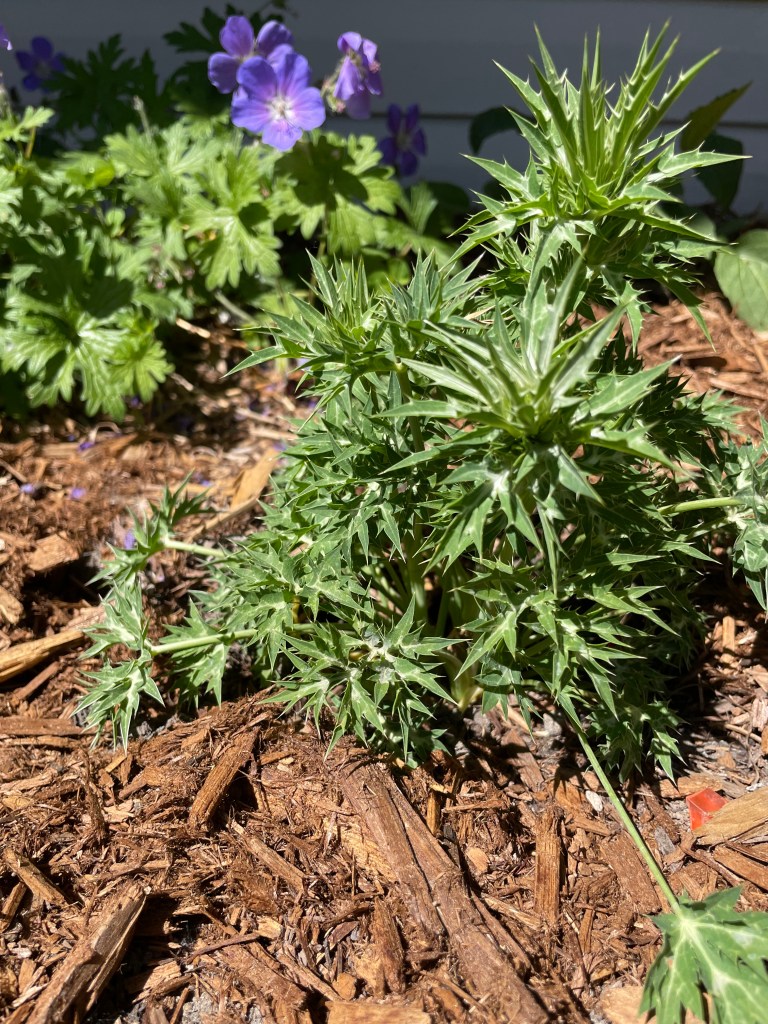
- Don’t put a wee layer down. Make it at least an inch or two to be effective. It’s not as expensive as that fern-leaf peony you’re coveting…depending on the size of garden bed, of course.
- Leave some space around or under the plant. Having damp mulch touching the leaves of your plants can cause issues like mildew and the spread of certain disease, fungus, etc.
- Choose drought-resistant plants.
- These can be native or non-native! Perennial or annual! And there’s lots out there that are pretty.
- Remember: If you’re buying a perennial, it doesn’t matter if it’s labelled drought-resistant or water-smart. It will still need plenty of water at planting to get it established.
- Location location location!
- When picking out your garden plants, we usually check to see if they are full-sun, partial shade, and so forth. But take it a step further. How does the mature height of neighbouring plants work in your garden? Do your tomatoes as they grow provide afternoon shade to the sensitive basil growing beneath in the peak of summer? (I’m currently making spaghetti sauce, so pardon the example for this point).
- Can the decorative flowers that need a lot of water be placed where they get only morning sun, and miss the afternoon heat spike?
- When you are first planting in the garden bed, also think about how or where the natural run off of water is going to be. Does it slope? Can you create a little version of a ‘swale’ to guide the water where it needs to go? I like to create a very shallow bowl around my perennials to trap a bit of water in my south-facing garden bed when it rains, allowing more water to absorb where it’s needed. (Not too deep, though – most plants don’t like to swim!)
- Water wisely:
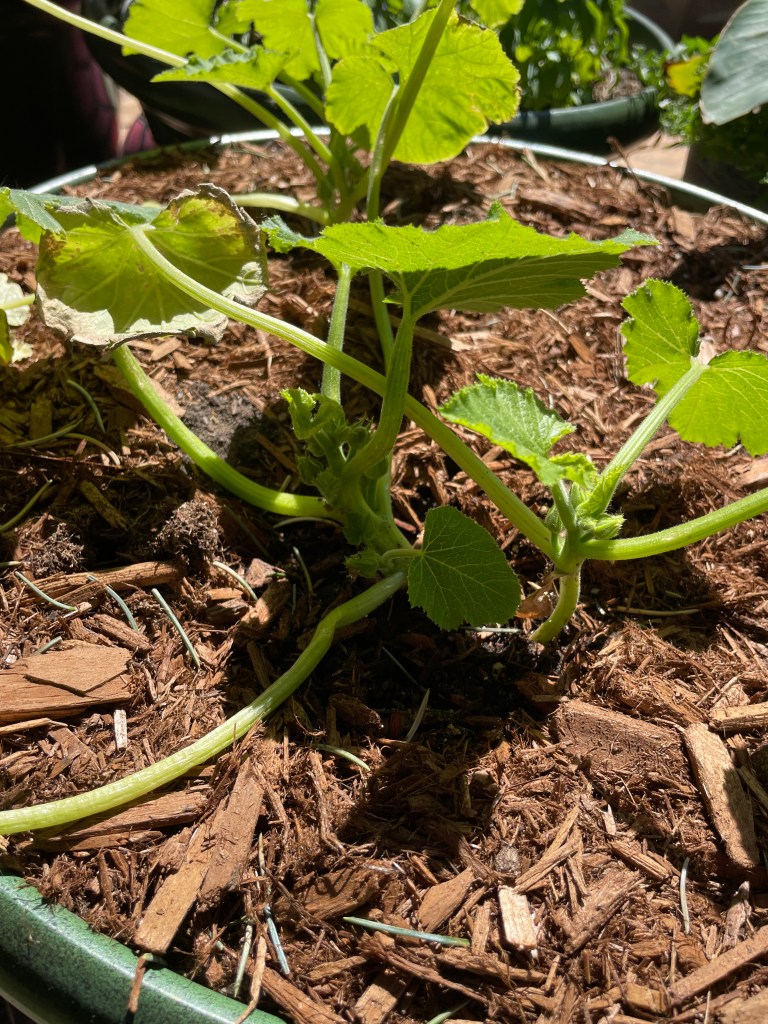
- Water in the early mornings or early evenings-before or after the heat of the day. It may be tempting when you see your zucchini leaves drooping, but you’ll soon discover it’s a drama queen, and it can wait for it’s (compost) tea at a later hour.
- I prefer mornings, especially in the later season, as too much damp and cooler night temps encourages fungus/mould. Blah.
- Save and use your grey water and aquarium water. It sounds ick, but for your lawn and trees, it’s ok!
- Mental note: If you have a softwater system, DO NOT save your shower water. Those kind of salts are NOT good for any plants. Sigh.
So there you have it! What are your favourite tips?


 Andrea’s Path to Plants
Leave a comment